2024 · M/J · 5054/41 | Q3

0/26parts marked · 0 of 40 marks
All questions
Question (3 of 4)14 marks · Practise this topic →
Options

Report Wrong question content

CIE-5054-2024-MJ-p41 · Question 3

Alternative to Practical: use the supplied data. Print measurement diagrams at the width stated in the question; screen previews resize them. Upload graphs and the readings used.

A student measures the focal length of a convex lens. Fig. 3.1 shows a lamp, illuminated object, lens and screen, with object–screen distance D. Place the screen at D = 60.0 cm. Starting with the lens close to the object, move it away until a clearly focused image forms. Fig. 3.1 is drawn at one fifth full size.

(a)(i)Measure distance x on Fig. 3.1 in cm. Original width of Fig. 3.1: 164.9 mm. Print at this width for accurate measurement. Do not measure an automatically resized screen preview.
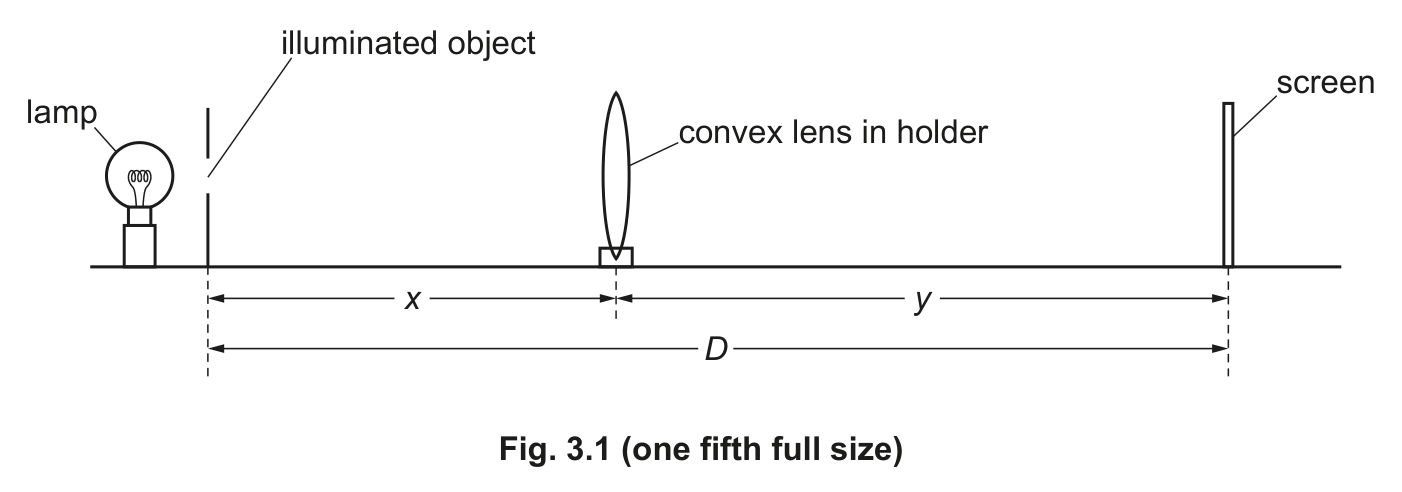
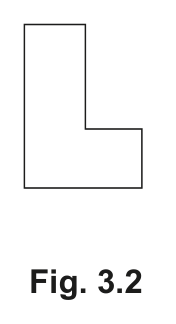
Fig. 3.1 — see the question text for what it shows
[1 mark]

(a)(ii)Use the one-fifth scale and your value of x to calculate the actual object distance u in cm.

Answer guidance

Using You must use the thing it names. An answer that reaches the right value another way may not score.

[1 mark]

(a)(iii)Deduce the image distance v from the lens to the screen in cm.

Answer guidance

Identify Name it and, where the marks allow, say what led you there.

[1 mark]

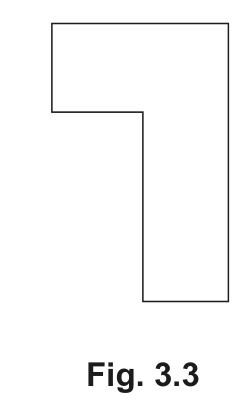
(b)Fig. 3.2 shows the object and Fig. 3.3 its image on the screen. Describe two differences between them.

Fig. 3.2 — see the question text for what it shows
Fig. 3.3 — see the question text for what it shows
Answer guidance

Describe Say what happens, in order. Reasons are not required unless the question also asks why.

[2 marks]
(c)(i)

The student moves the screen away from the illuminated object and repeats the procedure for values of D = 70.0 cm, 80.0 cm, 90.0 cm and 100.0 cm.

Table 3.1 shows the values recorded.

Add your values for u and v from (a)(ii) and (a)(iii) to Table 3.1 on page 12.

Complete Table 3.1 by calculating the value of (u × v) for each value of D.

Give your answers to 3 significant figures.

Table 3.1
Dcmucmvcm(u × v)cm2
60.0
70.021.049.0
80.019.560.5
90.018.671.4
100.017.882.2
Answer guidance

Complete Fill in every gap. A partly completed answer usually scores partly.

[2 marks]
(c)(ii)

Use the grid provided in Fig. 3.4 on page 13 to plot a graph of (u × v)cm2 on the y-axis against Dcm on the x-axis.

You do not need to start your axes at the origin (0,0).

Draw the straight line of best fit.

Answer guidance

Draw Accuracy is being marked. Use the figure and be precise about position and labels.

[4 marks]

(c)(iii)The focal length f is numerically equal to the gradient of your line. Calculate the gradient, showing all working and indicating on Fig. 3.4 the values you use. Give f in cm.

Answer guidance

Calculate Show your working. The method can earn marks even when the final value is wrong, and a bare answer often cannot.

[2 marks]

(d)The manufacturer states f = 15.0 cm ± 10%. Decide, with a calculation, whether your f agrees. State either “agrees” or “does not agree”.

Answer guidance

State A short answer. No explanation is needed, and adding one cannot earn extra marks.

[1 mark]

5054/41/M/J/24Cambridge O Level Physics 5054 · May/June 2024 · Paper 4 variant 1 · Question 3