2024 · M/J · 5054/31 | Q1

BackNext
0/26parts marked · 0 of 40 marks
All questions
Question (1 of 4)10 marks · Practise this topic →
Options

Report Wrong question content

CIE-5054-2024-MJ-p31 · Question 1

Practical test: laboratory apparatus, supervision and your own measurements are required. Do not invent observations. Upload clear working and graphs with the readings used.

Find the volume of a small glass ball (marble) by two methods. Method 1: six similar glass balls are placed beside a metre rule with no gaps, as shown in Fig. 1.1. You have six marbles, a fixed metre rule, two set squares, a 50 cm³ measuring cylinder, a 100 cm³ beaker of water, a top-pan balance and paper towels. Use your own measurements.

(a)(i)Use the set squares to measure the positions of A and B to the nearest 0.1 cm.
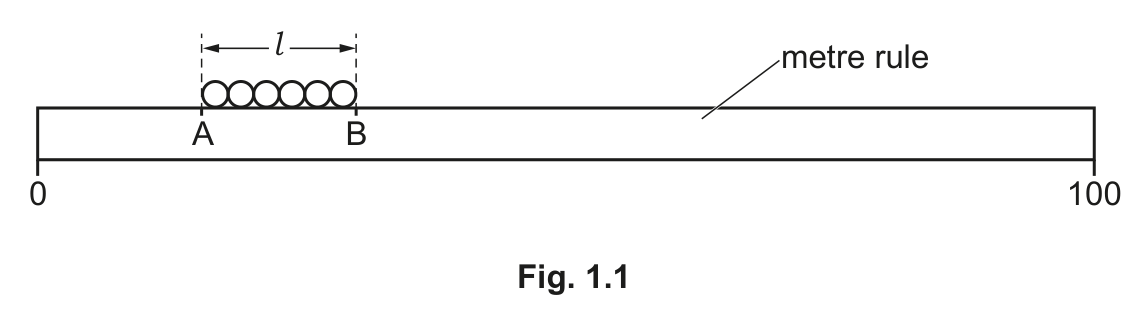
Fig. 1.1 — see the question text for what it shows
Answer guidance

Using You must use the thing it names. An answer that reaches the right value another way may not score.

[1 mark]

This part can’t be checked automatically yet. Compare your own working with the explanation below.

Show explanationHide explanation

One correct answer. This part can’t be checked automatically yet, so compare your own working with it.

Line up the six balls beside the fixed metre rule so that each touches the next, with no gaps. At each end of the row, stand a set square upright with its bottom edge across the rule at right angles to the rule, and slide it until its flat face just touches the outermost point of the end ball without pushing the row apart, as at A and B in Fig. 1.1.

Read the scale where that face of each set square meets the rule, to the nearest 0.1 cm (1 mm, the smallest division on the rule), and record both positions in cm. Look straight down at that point, not from the side, to avoid parallax. The mark is for two readings whose separation is the length of your row of six touching balls, so check the balls have not rolled apart before you read.

Do similar questions

(a)(ii)Length l is the distance between A and B. The average diameter d satisfies l = 6d. Use your answers to (a)(i) to find l and d, both to the nearest 0.1 cm.

Answer guidance

Using You must use the thing it names. An answer that reaches the right value another way may not score.

[2 marks]

This part can’t be checked automatically yet. Compare your own working with the explanation below.

Show explanationHide explanation

One correct answer. This part can’t be checked automatically yet, so compare your own working with it.

Find l by subtracting the smaller reading from the larger: l = position of B − position of A. Write it to the nearest 0.1 cm, with the unit cm. Use your own two readings from (a)(i); the first mark is for l agreeing with them.

Six touching balls in a row span six diameters, so l = 6d and d = l ÷ 6. Divide your l by 6 and round to the nearest 0.1 cm, as the question asks. The second mark needs both the correct division of your l and the answer written to 0.1 cm, so do not leave extra decimal places or round to a whole centimetre.

Do similar questions

(a)(iii)Calculate the average volume V of one ball in cm³ using V = 3.14d³/6.

Answer guidance

Calculate Show your working. The method can earn marks even when the final value is wrong, and a bare answer often cannot.

[1 mark]

This part can’t be checked automatically yet. Compare your own working with the explanation below.

Show explanationHide explanation

One correct answer. This part can’t be checked automatically yet, so compare your own working with it.

Substitute your own d from (a)(ii), in cm, into V = 3.14d³/6. Cube d first (d × d × d), then multiply by 3.14 and divide by 6. The answer is in cm³ because d is in cm. Make sure you cube d rather than multiplying it by 3.

This is the volume of a sphere written in terms of its diameter: (4/3) × 3.14 × (d/2)³ simplifies to 3.14d³/6. The mark is for your d put into the formula and V worked out correctly, so show the substitution and check the arithmetic.

Do similar questions

Method 2: pour water into the measuring cylinder until it is just over half full.

(b)(i)Record the initial volume V₁ of water in cm³.

Answer guidance

Using You must use the thing it names. An answer that reaches the right value another way may not score.

[1 mark]

This part can’t be checked automatically, and its answer is your own measurement, so there is no explanation for it.

(b)(ii)Carefully add the six balls and record the new volume V₂. Calculate their total volume Vₜ = V₂ − V₁ in cm³.

Answer guidance

Calculate Show your working. The method can earn marks even when the final value is wrong, and a bare answer often cannot.

[1 mark]

This part can’t be checked automatically yet. Compare your own working with the explanation below.

Show explanationHide explanation

One correct answer. This part can’t be checked automatically yet, so compare your own working with it.

Add the six balls carefully, for example one at a time, so that no water splashes out; lost water would make V2 too small. Check that all six balls are below the surface, because the rise in the water level equals their volume only when they are fully under water.

Read the new level V2 in cm³ and write it down: the mark needs V2 shown as well as Vt. Then calculate Vt = V2 − V1, the volume of water pushed up by the six balls, in cm³, using your own V1 from (b)(i).

Do similar questions

(b)(iii)Remove and dry the balls. Calculate the average volume V of one ball from method 2.

Answer guidance

Calculate Show your working. The method can earn marks even when the final value is wrong, and a bare answer often cannot.

[1 mark]

This part can’t be checked automatically yet. Compare your own working with the explanation below.

Show explanationHide explanation

One correct answer. This part can’t be checked automatically yet, so compare your own working with it.

Vt is the combined volume of all six balls, so the average volume of one ball is V = Vt ÷ 6. Divide your own Vt from (b)(ii) by 6 and give the answer in cm³. The mark is for this division done correctly with your value.

Do similar questions

(c)Suggest which method gives the more accurate volume and explain why.

Answer guidance

Suggest More than one answer may be acceptable, so long as it is consistent with the physics.

[1 mark]

This part can’t be checked automatically yet. Compare your own working with the explanation below.

Show explanationHide explanation

One correct answer. This part can’t be checked automatically yet, so compare your own working with it.

Choose method 1. The scheme accepts it with either of two reasons. One: the measuring cylinder can only be read to the nearest 0.5 cm³ or 1 cm³, depending on its scale, which is coarse for the volume of six small balls. Two: the rule measures the length, and so the diameter, to the nearest millimetre, which is more accurate.

The single mark is for method 1 together with a reason like one of these, so write both the method and the reason.

Do similar questions

(d)Use the beaker and top-pan balance to find the average mass of one glass ball. Describe the method, record the readings and give the mass in g.

Answer guidance

Describe Say what happens, in order. Reasons are not required unless the question also asks why.

[2 marks]

This part can’t be checked automatically yet. Compare your own working with the explanation below.

Show explanationHide explanation

One correct answer. This part can’t be checked automatically yet, so compare your own working with it.

Either of two routes earns both marks. Route one: put the small beaker on the top-pan balance and press tare so the balance reads zero. Add all six dried balls, read the mass in g, and divide it by 6 to get the mass of one ball.

Route two: put the beaker on the balance and record its mass. Add the six balls and record the new mass. Subtract the beaker's mass from the total and divide the answer by 6. Write the method as steps, list each reading in g, and give the mass of one glass ball in g.

Do similar questions

5054/31/M/J/24Cambridge O Level Physics 5054 · May/June 2024 · Paper 3 variant 1 · Question 1