Ultrasound of frequency 30 kHz has a wavelength of 0.011 m in air.
(a)(i)State what is meant by 'frequency'.
Ultrasound of frequency 30 kHz has a wavelength of 0.011 m in air.
(a)(i)State what is meant by 'frequency'.
Calculate the speed of ultrasound in air.
(a)(ii)Show your working.
(a)(iii)State one use of ultrasound.
Sound waves are longitudinal waves. Water waves are transverse waves.
Describe, by referring to the movement of the particles in the wave, the difference between a longitudinal wave and a transverse wave.
(b)(i)You may include a labelled diagram to help your description.
(b)(ii)State one source of waves that generates both longitudinal and transverse waves.
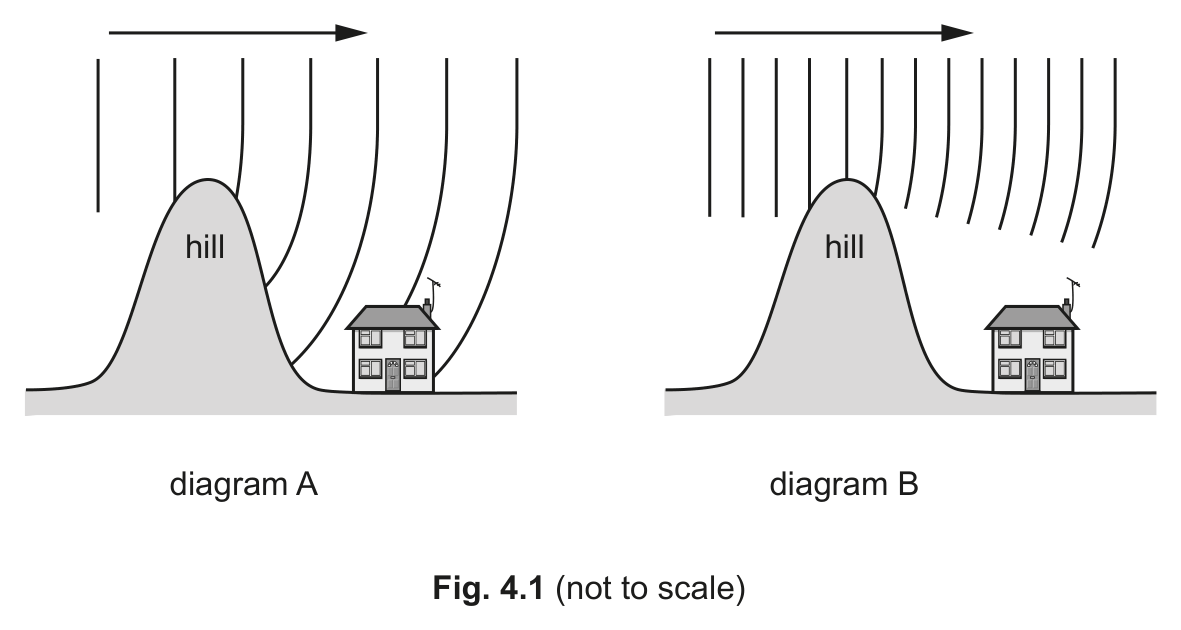
Fig. 4.1 shows radio waves of long and short wavelength passing over the same hill.
(c)Explain why the radio waves in diagram A reach the house but the radio waves in diagram B do not reach the house.
5054/21/M/J/24Cambridge O Level Physics 5054 · May/June 2024 · Paper 2 variant 1 · Question 4