Fig. 7.1 shows a ray of light striking a plane mirror. The ray is reflected as shown. The angle of incidence for the ray of light is 40°.
(a)(i)Indicate the angle of reflection by drawing a letter R on Fig. 7.1.
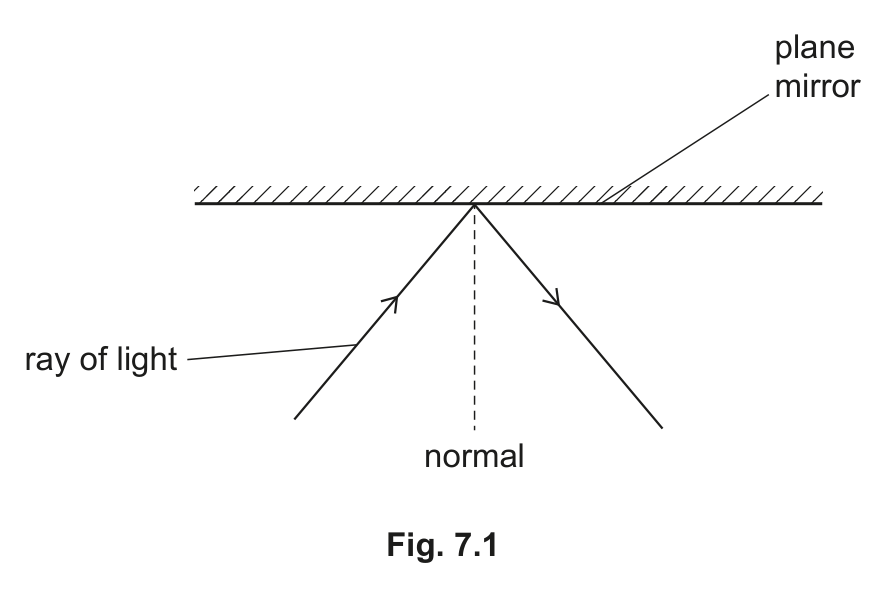
Fig. 7.1 shows a ray of light striking a plane mirror. The ray is reflected as shown. The angle of incidence for the ray of light is 40°.
(a)(i)Indicate the angle of reflection by drawing a letter R on Fig. 7.1.
A ray of light strikes a plane mirror and is reflected. The angle of incidence for the ray of light is 40°.
(a)(ii)State the size of the angle of reflection in Fig. 7.1.
An object O is placed to the left of a thin converging lens. F₁ is the principal focus on one side of the lens and F₂ is the principal focus on the other side of the lens. Two rays from the top of the object are incident on the lens, as shown in Fig. 7.2.
(b)(i)On Fig. 7.2, locate the image of O by continuing the path of each ray.
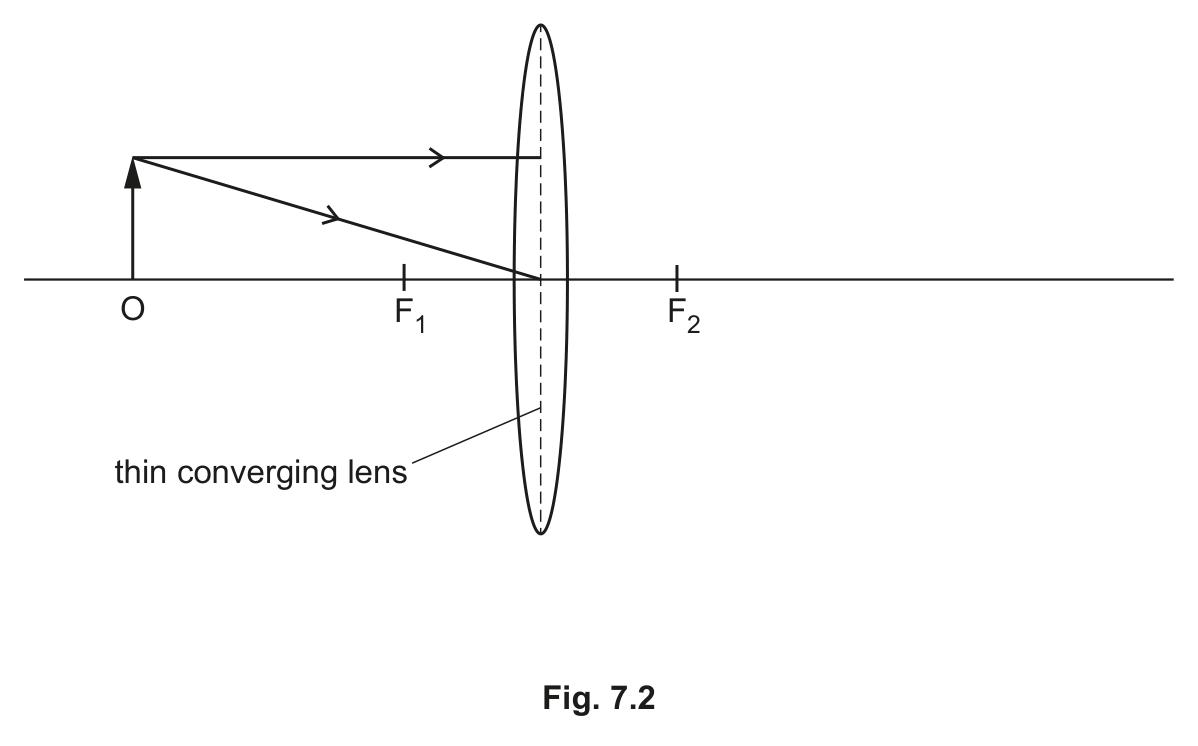
An object O is placed to the left of a thin converging lens, beyond the principal focus F₁, and two rays from the top of the object are incident on the lens (see Fig. 7.2, with O, F₁, lens and F₂ on the principal axis).
(b)(ii)Draw an arrow to represent the image of O.
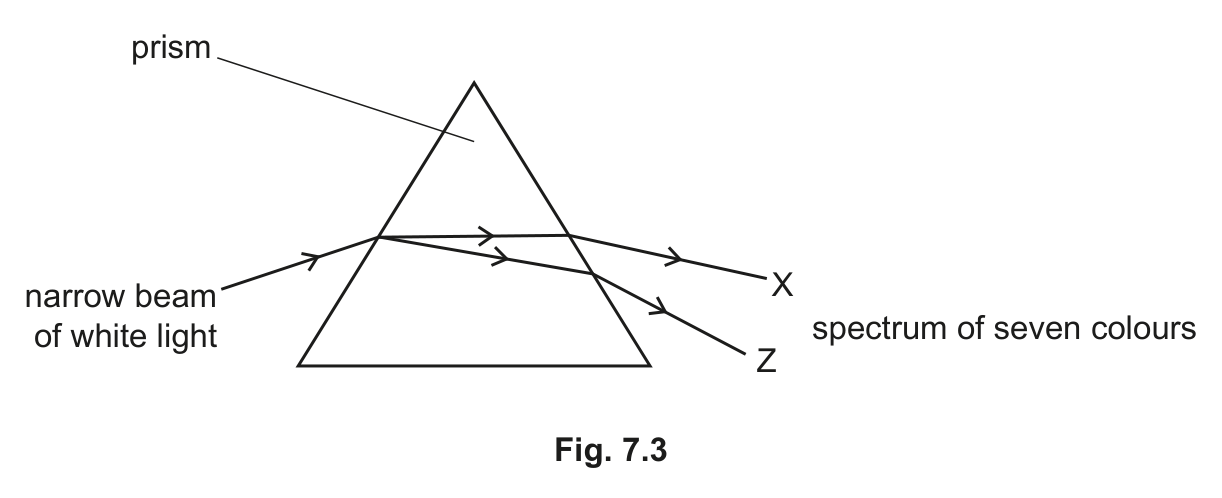
Fig. 7.3 shows a prism producing a spectrum of colours from a narrow beam of white light.
The prism refracts the white light.
(c)(i)State the name of the effect that produces a spectrum.
0625/31/M/J/24Cambridge IGCSE Physics 0625 · May/June 2024 · Paper 3 variant 1 · Question 7